Why is cold ocean water more nutrient-rich than warm water ?
Although it may seem counterintuitive, extremely cold ocean waters are significantly richer in nutrients compared to the warmer waters found in vibrant and colorful tropical ecosystems. Note that by nutrients we designate inorganic material (nitrogen, phosphates, silicates, iron, zinc, etc.). The origins of these cold waters can be traced to the ocean's deep recesses, where they ascend to the surface propelled by a crucial phenomenon known as Upwelling, driven by ocean dynamics.
These cold waters come from the deep ocean, moving up to the surface because of something called Upwelling, a crucial process in how the ocean works.
Reasons colder water are nutrient-rich:
- They start from parts of the ocean close to the nutrient-rich seabed with lots of sediments and "salts."
- Deep waters are too dark for phytoplankton to do photosynthesis, so they can't live there and use the nutrients.
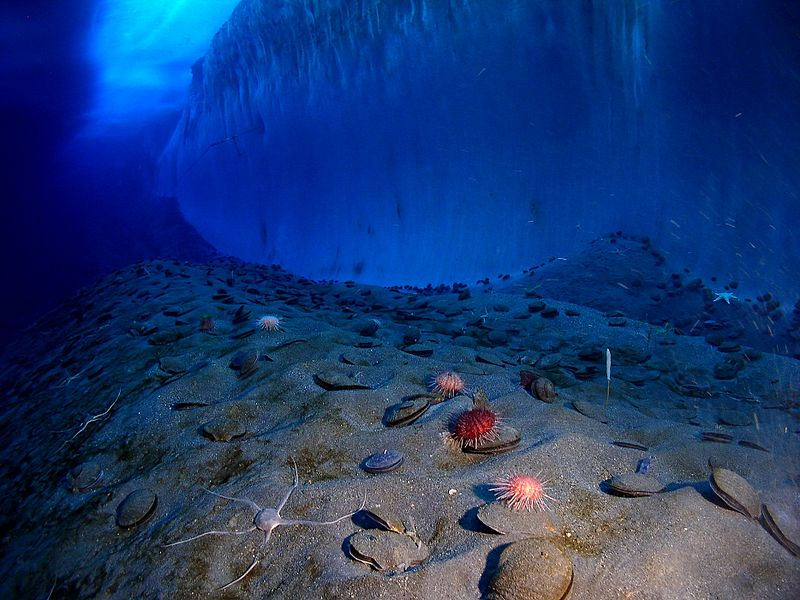
Coral reefs exemplify warm-water systems characterized by low nutrient levels, attributed to the efficient incorporation and recycling of nutrients by living organisms. While nutrient-rich warm-water environments exist, they are often linked to disturbances rather than long-term stability. Shallow warm waters can swiftly support plant, algae, or bacterial life that move in to take advantage of available nutrients quickly, contributing to the transparency observed in tropical waters.
About upwelling: Upwelling is a phenomenon in oceanography where cold, nutrient-rich waters from the deep ocean rise to the surface. This typically occurs along coastlines when winds push the warmer and usually nutrient-depleted surface water away, allowing denser, cooler, and usually nutrient-rich waters to replace it. The nutrient-rich waters that upwell to the surface support the growth of phytoplankton and contribute to high biological productivity, making upwelling areas important for fisheries and marine ecosystems. The biomass of phytoplankton and the presence of cool water in those regions allow upwelling zones to be identified by cool sea surface temperatures and high concentrations of chlorophyll (see here)